A savepoint is a way of implementing subtransactions (also known as nested transactions) within a relational database management system by indicating a point within a transaction that can be "rolled back to" without affecting any work done in the transaction before the savepoint was created. Multiple savepoints can exist within a single transaction. Savepoints are useful for implementing complex error recovery in database applications. If an error occurs in the midst of a multiple-statement transaction, the application may be able to recover from the error (by rolling back to a savepoint) without needing to abort the entire transaction. A savepoint can be declared by issuing a SAVEPOINT name statement. All changes made after a savepoint has been declared can be undone by issuing a ROLLBACK TO SAVEPOINT name command. Issuing RELEASE SAVEPOINT name will cause the named savepoint to be discarded, but will not otherwise affect anything. Issuing the commands ROLLBACK or COMMIT will also discard any savepoints created since the start of the main transaction. Savepoints are defined in the SQL standard and are supported by all established SQL relational databases, including PostgreSQL, Oracle Database, Microsoft SQL Server, MySQL, IBM Db2, SQLite (since 3.6.8), Firebird, H2 Database Engine, and Informix (since version 11.50xC3).
Keith Youngin George II
Keith "Youngin" George II is a former mixtape DJ, music executive, manager, producer, and technology app director. He has collaborated with Maino, T-Pain, Nas and Soulja Boy, among others. He was instrumental in the launch of social media app and website, Kandiid in 2021 and served as Fliiks App Director of Regional Development. == Career == Keith Anthony George II was born in Upper Heyford, Oxfordshire, England. His father was in the Air Force which exposed him to different cultures and music. He graduated from Allen High School and attended San Antonio College. George's music career began in 2006 as a mixtape DJ working as DJ Youngin Beatz. He performed at various shows and worked with a variety of artists, managers, and music executives. In 2007, George released the mixtape, Untapped market Vol. 1 (Da Underdogz), which featured tracks from artists including Kanye West, Lil Wayne, 50 Cent, Yung Berg, and Nelly. In 2008, he began working with Def Jam executive Sarah Alminawi who was managing Maino at the time. George played a key role in the marketing and promotional success of Maino's single, Hi Hater, which peaked at #8 on Billboard's US Bubbling Under Hot 100 chart. In 2021, George was an advisor and infrastructure head at Kandiid, a social media app which won a W3 Award in 2022. In 2023, he became involved with Fliiks App as Director of Regional Development which earned a Telly Award, two Muse Awards, and a W3 Award in 2025. In 2025, George was a composer and producer on two singles on Sekou Andrews's album, Koumami; The Chosen One: ACT 1 (featuring Lion Babe) and Love Don't Care (featuring Jordin Sparks and Omari Hardwick). In 2025, he was awarded an Atlanta City Proclamation for Philanthropy and Community Leadership for his partnership with Women's International Grail, a nonprofit organization that assists women, single mothers, and low-income families. He also collaborates with local youth programs, creative networks, and minority-owned startups, providing access to mentorship and industry knowledge. == Awards ==
Two-phase commit protocol
In transaction processing, databases, and computer networking, the two-phase commit protocol (2PC, tupac) is a type of atomic commitment protocol (ACP). It is a distributed algorithm that coordinates all the processes that participate in a distributed atomic transaction on whether to commit or abort (roll back) the transaction. This protocol (a specialised type of consensus protocol) achieves its goal even in many cases of temporary system failure (involving either process, network node, communication, etc. failures), and is thus widely used. However, it is not resilient to all possible failure configurations, and in rare cases, manual intervention is needed to remedy an outcome. To accommodate recovery from failure (automatic in most cases) the protocol's participants use logging of the protocol's states. Log records, which are typically slow to generate but survive failures, are used by the protocol's recovery procedures. Many protocol variants exist that primarily differ in logging strategies and recovery mechanisms. Though usually intended to be used infrequently, recovery procedures compose a substantial portion of the protocol, due to many possible failure scenarios to be considered and supported by the protocol. In a "normal execution" of any single distributed transaction (i.e., when no failure occurs, which is typically the most frequent situation), the protocol consists of two phases: The commit-request phase (or voting phase), in which a coordinator process attempts to prepare all the transaction's participating processes (named participants, cohorts, or workers) to take the necessary steps for either committing or aborting the transaction and to vote, either "Yes": commit (if the transaction participant's local portion execution has ended properly), or "No": abort (if a problem has been detected with the local portion), and The commit phase, in which, based on voting of the participants, the coordinator decides whether to commit (only if all have voted "Yes") or abort the transaction (otherwise), and notifies the result to all the participants. The participants then follow with the needed actions (commit or abort) with their local transactional resources (also called recoverable resources; e.g., database data) and their respective portions in the transaction's other output (if applicable). The two-phase commit (2PC) protocol should not be confused with the two-phase locking (2PL) protocol, a concurrency control protocol. == Assumptions == The protocol works in the following manner: one node is a designated coordinator, which is the master site, and the rest of the nodes in the network are designated the participants. The protocol assumes that: there is stable storage at each node with a write-ahead log, no node crashes forever, the data in the write-ahead log is never lost or corrupted in a crash, and any two nodes can communicate with each other. The last assumption is not too restrictive, as network communication can typically be rerouted. The first two assumptions are much stronger; if a node is totally destroyed then data can be lost. The protocol is initiated by the coordinator after the last step of the transaction has been reached. The participants then respond with an agreement message or an abort message depending on whether the transaction has been processed successfully at the participant. == Basic algorithm == === Commit request (or voting) phase === The coordinator sends a query to commit message to all participants and waits until it has received a reply from all participants. The participants execute the transaction up to the point where they will be asked to commit. They each write an entry to their undo log and an entry to their redo log. Each participant replies with: either an agreement message (participant votes Yes to commit), if the participant's actions succeeded; or an abort message (participant votes No to commit), if the participant experiences a failure that will make it impossible to commit. === Commit (or completion) phase === ==== Success ==== If the coordinator received an agreement message from all participants during the commit-request phase: The coordinator sends a commit message to all the participants. Each participant completes the operation, and releases all the locks and resources held during the transaction. Each participant sends an acknowledgement to the coordinator. The coordinator completes the transaction when all acknowledgements have been received. ==== Failure ==== If any participant votes No during the commit-request phase (or the coordinator's timeout expires): The coordinator sends a rollback message to all the participants. Each participant undoes the transaction using the undo log, and releases the resources and locks held during the transaction. Each participant sends an acknowledgement to the coordinator. The coordinator undoes the transaction when all acknowledgements have been received. ==== Message flow ==== Coordinator Participant QUERY TO COMMIT --------------------------------> VOTE YES/NO prepare/abort <------------------------------- commit/abort COMMIT/ROLLBACK --------------------------------> ACKNOWLEDGEMENT commit/abort <-------------------------------- end An next to the record type means that the record is forced to stable storage. == Disadvantages == The greatest disadvantage of the two-phase commit protocol is that it is a blocking protocol. If the coordinator fails permanently, some participants will never resolve their transactions: After a participant has sent an agreement message as a response to the commit-request message from the coordinator, it will block until a commit or rollback is received. A two-phase commit protocol cannot dependably recover from a failure of both the coordinator and a cohort member during the commit phase. If only the coordinator had failed, and no cohort members had received a commit message, it could safely be inferred that no commit had happened. If, however, both the coordinator and a cohort member failed, it is possible that the failed cohort member was the first to be notified, and had actually done the commit. Even if a new coordinator is selected, it cannot confidently proceed with the operation until it has received an agreement from all cohort members, and hence must block until all cohort members respond. == Implementing the two-phase commit protocol == === Common architecture === In many cases the 2PC protocol is distributed in a computer network. It is easily distributed by implementing multiple dedicated 2PC components similar to each other, typically named transaction managers (TMs; also referred to as 2PC agents or Transaction Processing Monitors), that carry out the protocol's execution for each transaction (e.g., The Open Group's X/Open XA). The databases involved with a distributed transaction, the participants, both the coordinator and participants, register to close TMs (typically residing on respective same network nodes as the participants) for terminating that transaction using 2PC. Each distributed transaction has an ad hoc set of TMs, the TMs to which the transaction participants register. A leader, the coordinator TM, exists for each transaction to coordinate 2PC for it, typically the TM of the coordinator database. However, the coordinator role can be transferred to another TM for performance or reliability reasons. Rather than exchanging 2PC messages among themselves, the participants exchange the messages with their respective TMs. The relevant TMs communicate among themselves to execute the 2PC protocol schema above, "representing" the respective participants, for terminating that transaction. With this architecture the protocol is fully distributed (does not need any central processing component or data structure), and scales up with number of network nodes (network size) effectively. This common architecture is also effective for the distribution of other atomic commitment protocols besides 2PC, since all such protocols use the same voting mechanism and outcome propagation to protocol participants. === Protocol optimizations === Database research has been done on ways to get most of the benefits of the two-phase commit protocol while reducing costs by protocol optimizations and protocol operations saving under certain system's behavior assumptions. ==== Presumed abort and presumed commit ==== Presumed abort or Presumed commit are common such optimizations. An assumption about the outcome of transactions, either commit, or abort, can save both messages and logging operations by the participants during the 2PC protocol's execution. For example, when presumed abort, if during system recovery from failure no logged evidence for commit of some transaction is found by the recovery procedure, then it assumes that the transaction has been aborted, and acts accordingly. This means that it does not matter if aborts are logged at all, and such logging can be saved under this assumption. Typical
Whitehead's algorithm
Whitehead's algorithm is a mathematical algorithm in group theory for solving the automorphic equivalence problem in the finite rank free group Fn. The algorithm is based on a classic 1936 paper of J. H. C. Whitehead. It is still unknown (except for the case n = 2) if Whitehead's algorithm has polynomial time complexity. == Statement of the problem == Let F n = F ( x 1 , … , x n ) {\displaystyle F_{n}=F(x_{1},\dots ,x_{n})} be a free group of rank n ≥ 2 {\displaystyle n\geq 2} with a free basis X = { x 1 , … , x n } {\displaystyle X=\{x_{1},\dots ,x_{n}\}} . The automorphism problem, or the automorphic equivalence problem for F n {\displaystyle F_{n}} asks, given two freely reduced words w , w ′ ∈ F n {\displaystyle w,w'\in F_{n}} whether there exists an automorphism φ ∈ Aut ( F n ) {\displaystyle \varphi \in \operatorname {Aut} (F_{n})} such that φ ( w ) = w ′ {\displaystyle \varphi (w)=w'} . Thus the automorphism problem asks, for w , w ′ ∈ F n {\displaystyle w,w'\in F_{n}} whether Aut ( F n ) w = Aut ( F n ) w ′ {\displaystyle \operatorname {Aut} (F_{n})w=\operatorname {Aut} (F_{n})w'} . For w , w ′ ∈ F n {\displaystyle w,w'\in F_{n}} one has Aut ( F n ) w = Aut ( F n ) w ′ {\displaystyle \operatorname {Aut} (F_{n})w=\operatorname {Aut} (F_{n})w'} if and only if Out ( F n ) [ w ] = Out ( F n ) [ w ′ ] {\displaystyle \operatorname {Out} (F_{n})[w]=\operatorname {Out} (F_{n})[w']} , where [ w ] , [ w ′ ] {\displaystyle [w],[w']} are conjugacy classes in F n {\displaystyle F_{n}} of w , w ′ {\displaystyle w,w'} accordingly. Therefore, the automorphism problem for F n {\displaystyle F_{n}} is often formulated in terms of Out ( F n ) {\displaystyle \operatorname {Out} (F_{n})} -equivalence of conjugacy classes of elements of F n {\displaystyle F_{n}} . For an element w ∈ F n {\displaystyle w\in F_{n}} , | w | X {\displaystyle |w|_{X}} denotes the freely reduced length of w {\displaystyle w} with respect to X {\displaystyle X} , and ‖ w ‖ X {\displaystyle \|w\|_{X}} denotes the cyclically reduced length of w {\displaystyle w} with respect to X {\displaystyle X} . For the automorphism problem, the length of an input w {\displaystyle w} is measured as | w | X {\displaystyle |w|_{X}} or as ‖ w ‖ X {\displaystyle \|w\|_{X}} , depending on whether one views w {\displaystyle w} as an element of F n {\displaystyle F_{n}} or as defining the corresponding conjugacy class [ w ] {\displaystyle [w]} in F n {\displaystyle F_{n}} . == History == The automorphism problem for F n {\displaystyle F_{n}} was algorithmically solved by J. H. C. Whitehead in a classic 1936 paper, and his solution came to be known as Whitehead's algorithm. Whitehead used a topological approach in his paper. Namely, consider the 3-manifold M n = # i = 1 n S 2 × S 1 {\displaystyle M_{n}=\#_{i=1}^{n}\mathbb {S} ^{2}\times \mathbb {S} ^{1}} , the connected sum of n {\displaystyle n} copies of S 2 × S 1 {\displaystyle \mathbb {S} ^{2}\times \mathbb {S} ^{1}} . Then π 1 ( M n ) ≅ F n {\displaystyle \pi _{1}(M_{n})\cong F_{n}} , and, moreover, up to a quotient by a finite normal subgroup isomorphic to Z 2 n {\displaystyle \mathbb {Z} _{2}^{n}} , the mapping class group of M n {\displaystyle M_{n}} is equal to Out ( F n ) {\displaystyle \operatorname {Out} (F_{n})} ; see. Different free bases of F n {\displaystyle F_{n}} can be represented by isotopy classes of "sphere systems" in M n {\displaystyle M_{n}} , and the cyclically reduced form of an element w ∈ F n {\displaystyle w\in F_{n}} , as well as the Whitehead graph of [ w ] {\displaystyle [w]} , can be "read-off" from how a loop in general position representing [ w ] {\displaystyle [w]} intersects the spheres in the system. Whitehead moves can be represented by certain kinds of topological "swapping" moves modifying the sphere system. Subsequently, Rapaport, and later, based on her work, Higgins and Lyndon, gave a purely combinatorial and algebraic re-interpretation of Whitehead's work and of Whitehead's algorithm. The exposition of Whitehead's algorithm in the book of Lyndon and Schupp is based on this combinatorial approach. Culler and Vogtmann, in their 1986 paper that introduced the Outer space, gave a hybrid approach to Whitehead's algorithm, presented in combinatorial terms but closely following Whitehead's original ideas. == Whitehead's algorithm == Our exposition regarding Whitehead's algorithm mostly follows Ch.I.4 in the book of Lyndon and Schupp, as well as. === Overview === The automorphism group Aut ( F n ) {\displaystyle \operatorname {Aut} (F_{n})} has a particularly useful finite generating set W {\displaystyle {\mathcal {W}}} of Whitehead automorphisms or Whitehead moves. Given w , w ′ ∈ F n {\displaystyle w,w'\in F_{n}} the first part of Whitehead's algorithm consists of iteratively applying Whitehead moves to w , w ′ {\displaystyle w,w'} to take each of them to an "automorphically minimal" form, where the cyclically reduced length strictly decreases at each step. Once we find automorphically these minimal forms u , u ′ {\displaystyle u,u'} of w , w ′ {\displaystyle w,w'} , we check if ‖ u ‖ X = ‖ u ′ ‖ X {\displaystyle \|u\|_{X}=\|u'\|_{X}} . If ‖ u ‖ X ≠ ‖ u ′ ‖ X {\displaystyle \|u\|_{X}\neq \|u'\|_{X}} then w , w ′ {\displaystyle w,w'} are not automorphically equivalent in F n {\displaystyle F_{n}} . If ‖ u ‖ X = ‖ u ′ ‖ X {\displaystyle \|u\|_{X}=\|u'\|_{X}} , we check if there exists a finite chain of Whitehead moves taking u {\displaystyle u} to u ′ {\displaystyle u'} so that the cyclically reduced length remains constant throughout this chain. The elements w , w ′ {\displaystyle w,w'} are not automorphically equivalent in F n {\displaystyle F_{n}} if and only if such a chain exists. Whitehead's algorithm also solves the search automorphism problem for F n {\displaystyle F_{n}} . Namely, given w , w ′ ∈ F n {\displaystyle w,w'\in F_{n}} , if Whitehead's algorithm concludes that Aut ( F n ) w = Aut ( F n ) w ′ {\displaystyle \operatorname {Aut} (F_{n})w=\operatorname {Aut} (F_{n})w'} , the algorithm also outputs an automorphism φ ∈ Aut ( F n ) {\displaystyle \varphi \in \operatorname {Aut} (F_{n})} such that φ ( w ) = w ′ {\displaystyle \varphi (w)=w'} . Such an element φ ∈ Aut ( F n ) {\displaystyle \varphi \in \operatorname {Aut} (F_{n})} is produced as the composition of a chain of Whitehead moves arising from the above procedure and taking w {\displaystyle w} to w ′ {\displaystyle w'} . === Whitehead automorphisms === A Whitehead automorphism, or Whitehead move, of F n {\displaystyle F_{n}} is an automorphism τ ∈ Aut ( F n ) {\displaystyle \tau \in \operatorname {Aut} (F_{n})} of F n {\displaystyle F_{n}} of one of the following two types: There is a permutation σ ∈ S n {\displaystyle \sigma \in S_{n}} of { 1 , 2 , … , n } {\displaystyle \{1,2,\dots ,n\}} such that for i = 1 , … , n {\displaystyle i=1,\dots ,n} τ ( x i ) = x σ ( i ) ± 1 {\displaystyle \tau (x_{i})=x_{\sigma (i)}^{\pm 1}} Such τ {\displaystyle \tau } is called a Whitehead automorphism of the first kind. There is an element a ∈ X ± 1 {\displaystyle a\in X^{\pm 1}} , called the multiplier, such that for every x ∈ X ± 1 {\displaystyle x\in X^{\pm 1}} τ ( x ) ∈ { x , x a , a − 1 x , a − 1 x a } . {\displaystyle \tau (x)\in \{x,xa,a^{-1}x,a^{-1}xa\}.} Such τ {\displaystyle \tau } is called a Whitehead automorphism of the second kind. Since τ {\displaystyle \tau } is an automorphism of F n {\displaystyle F_{n}} , it follows that τ ( a ) = a {\displaystyle \tau (a)=a} in this case. Often, for a Whitehead automorphism τ ∈ Aut ( F n ) {\displaystyle \tau \in \operatorname {Aut} (F_{n})} , the corresponding outer automorphism in Out ( F n ) {\displaystyle \operatorname {Out} (F_{n})} is also called a Whitehead automorphism or a Whitehead move. ==== Examples ==== Let F 4 = F ( x 1 , x 2 , x 3 , x 4 ) {\displaystyle F_{4}=F(x_{1},x_{2},x_{3},x_{4})} . Let τ : F 4 → F 4 {\displaystyle \tau :F_{4}\to F_{4}} be a homomorphism such that τ ( x 1 ) = x 2 x 1 , τ ( x 2 ) = x 2 , τ ( x 3 ) = x 2 x 3 x 2 − 1 , τ ( x 4 ) = x 4 {\displaystyle \tau (x_{1})=x_{2}x_{1},\quad \tau (x_{2})=x_{2},\quad \tau (x_{3})=x_{2}x_{3}x_{2}^{-1},\quad \tau (x_{4})=x_{4}} Then τ {\displaystyle \tau } is actually an automorphism of F 4 {\displaystyle F_{4}} , and, moreover, τ {\displaystyle \tau } is a Whitehead automorphism of the second kind, with the multiplier a = x 2 − 1 {\displaystyle a=x_{2}^{-1}} . Let τ ′ : F 4 → F 4 {\displaystyle \tau ':F_{4}\to F_{4}} be a homomorphism such that τ ′ ( x 1 ) = x 1 , τ ′ ( x 2 ) = x 1 − 1 x 2 x 1 , τ ′ ( x 3 ) = x 1 − 1 x 3 x 1 , τ ′ ( x 4 ) = x 1 − 1 x 4 x 1 {\displaystyle \tau '(x_{1})=x_{1},\quad \tau '(x_{2})=x_{1}^{-1}x_{2}x_{1},\quad \tau '(x_{3})=x_{1}^{-1}x_{3}x_{1},\quad \tau '(x_{4})=x_{1}^{-1}x_{4}x_{1}} Then τ ′ {\displaystyle \tau '} is actually an inner automorphism of F 4 {\displaystyle F_{4}} given by conjugation by x 1 {\displaystyle x_{1}} , and, moreover, τ ′ {\displaystyle \
Query rewriting
Query rewriting is a typically automatic transformation that takes a set of database tables, views, and/or queries, usually indices, often gathered data and query statistics, and other metadata, and yields a set of different queries, which produce the same results but execute with better performance (for example, faster, or with lower memory use). Query rewriting can be based on relational algebra or an extension thereof (e.g. multiset relational algebra with sorting, aggregation and three-valued predicates i.e. NULLs as in the case of SQL). The equivalence rules of relational algebra are exploited, in other words, different query structures and orderings can be mathematically proven to yield the same result. For example, filtering on fields A and B, or cross joining R and S can be done in any order, but there can be a performance difference. Multiple operations may be combined, and operation orders may be altered. The result of query rewriting may not be at the same abstraction level or application programming interface (API) as the original set of queries (though often is). For example, the input queries may be in relational algebra or SQL, and the rewritten queries may be closer to the physical representation of the data, e.g. array operations. Query rewriting can also involve materialization of views and other subqueries; operations that may or may not be available to the API user. The query rewriting transformation can be aided by creating indices from which the optimizer can choose (some database systems create their own indexes if deemed useful), mandating the use of specific indices, creating materialized and/or denormalized views, or helping a database system gather statistics on the data and query use, as the optimality depends on patterns in data and typical query usage. Query rewriting may be rule based or optimizer based. Some sources discuss query rewriting as a distinct step prior to optimization, operating at the level of the user accessible algebra API (e.g. SQL). There are other, largely unrelated concepts also named similarly, for example, query rewriting by search engines.
Accelerated Linear Algebra
XLA (Accelerated Linear Algebra) is an open-source compiler for machine learning developed by the OpenXLA project. XLA is designed to improve the performance of machine learning models by optimizing the computation graphs at a lower level, making it particularly useful for large-scale computations and high-performance machine learning models. Key features of XLA include: Compilation of Computation Graphs: Compiles computation graphs into efficient machine code. Optimization Techniques: Applies operation fusion, memory optimization, and other techniques. Hardware Support: Optimizes models for various hardware, including CPUs, GPUs, and NPUs. Improved Model Execution Time: Aims to reduce machine learning models' execution time for both training and inference. Seamless Integration: Can be used with existing machine learning code with minimal changes. XLA represents a significant step in optimizing machine learning models, providing developers with tools to enhance computational efficiency and performance. == OpenXLA Project == OpenXLA Project is an open-source machine learning compiler and infrastructure initiative intended to provide a common set of tools for compiling and deploying machine learning models across different frameworks and hardware platforms. It provides a modular compilation stack that can be used by major deep learning frameworks like JAX, PyTorch, and TensorFlow. The project focuses on supplying shared components for optimization, portability, and execution across CPUs, GPUs, and specialized accelerators. Its design emphasizes interoperability between frameworks and a standardized set of representations for model computation. == Components == The OpenXLA ecosystem includes several core components: XLA – A deep learning compiler that optimizes computational graphs for multiple hardware targets. PJRT – A runtime interface that allows different back-ends to connect to XLA through a consistent API. StableHLO – A high-level operator set intended to serve as a stable, portable representation for ML models across compilers and frameworks. Shardy – An MLIR-based system for describing and transforming models that run in distributed or multi-device environments. Additional profiling, testing, and integration tools maintained under the OpenXLA organization. == Users and adopters == Several machine learning frameworks can use or interoperate with OpenXLA components, including JAX, TensorFlow, and parts of the PyTorch ecosystem. The project is developed with participation from multiple hardware and software organizations that contribute back-end integrations, testing, or specifications for their devices. This includes Alibaba, Amazon Web Services, AMD, Anyscale, Apple, Arm, Cerebras, Google, Graphcore, Hugging Face, Intel, Meta, NVIDIA and SiFive. == Supported target devices == x86-64 ARM64 NVIDIA GPU AMD GPU Intel GPU Apple GPU Google TPU AWS Trainium, Inferentia Cerebras Graphcore IPU == Governance == OpenXLA is developed as a community project with its work carried out in public repositories, discussion forums, and design meetings. Some components, such as StableHLO, began with stewardship from specific organizations and have outlined plans for more formal and distributed governance models as the project matures. == History == The project was announced in 2022 as an effort to coordinate development of ML compiler technologies across major AI companies, notably: Alibaba, Amazon Web Services, AMD, Anyscale, Apple, Arm, Cerebras, Google, Graphcore, Hugging Face, Intel, Meta, NVIDIA and SiFive.. It consolidated the XLA compiler, introduced StableHLO as a portable operator set, and created a unified structure for additional tools. Development continues within multiple repositories under the OpenXLA umbrella. It was founded by Eugene Burmako, James Rubin, Magnus Hyttsten, Mehdi Amini, Navid Khajouei, and Thea Lamkin from Google's Machine Learning organization.
Artificial intelligence in industry
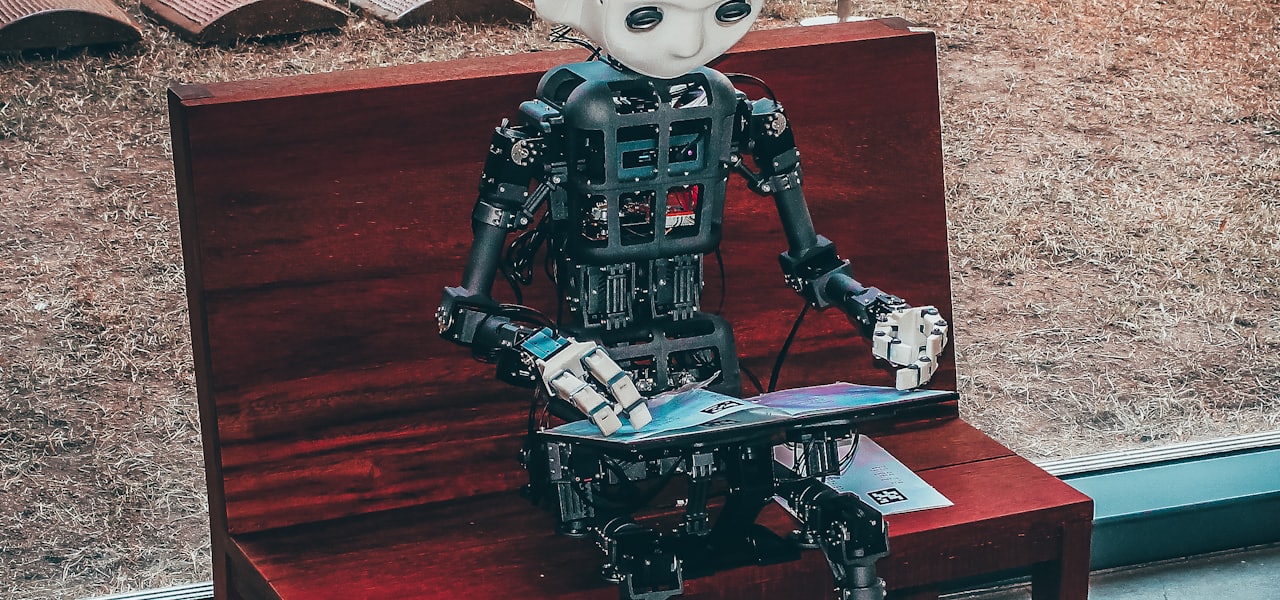
Industrial artificial intelligence, or industrial AI, refers to the application of artificial intelligence to industrial business processes. Unlike general artificial intelligence which is a frontier research discipline to build computerized systems that perform tasks requiring human intelligence, industrial AI is more concerned with the application of such technologies to address industrial pain-points for customer value creation, productivity improvement, cost reduction, site optimization, predictive analysis and insight discovery. Artificial intelligence and machine learning have become key enablers to leverage data in production in recent years due to a number of different factors: More affordable sensors and the automated process of data acquisition; More powerful computation capability of computers to perform more complex tasks at a faster speed with lower cost; Faster connectivity infrastructure and more accessible cloud services for data management and computing power outsourcing. == Categories == Possible applications of industrial AI and machine learning in the production domain can be divided into seven application areas: Market and trend analysis Machinery and equipment Intralogistics Production process Supply chain Building Product Each application area can be further divided into specific application scenarios that describe concrete AI/ML scenarios in production. While some application areas have a direct connection to production processes, others cover production adjacent fields like logistics or the factory building. An example from the application scenario Process Design & Innovation are collaborative robots. Collaborative robotic arms are able to learn the motion and path demonstrated by human operators and perform the same task. Predictive and preventive maintenance through data-driven machine learning are application scenarios from the Machinery & Equipment application area. == Challenges == In contrast to entirely virtual systems, in which ML applications are already widespread today, real-world production processes are characterized by the interaction between the virtual and the physical world. Data is recorded using sensors and processed on computational entities and, if desired, actions and decisions are translated back into the physical world via actuators or by human operators. This poses major challenges for the application of ML in production engineering systems. These challenges are attributable to the encounter of process, data and model characteristics: The production domain's high reliability requirements, high risk and loss potential, the multitude of heterogeneous data sources and the non-transparency of ML model functionality impede a faster adoption of ML in real-world production processes. In particular, production data comprises a variety of different modalities, semantics and quality. Furthermore, production systems are dynamic, uncertain and complex, and engineering and manufacturing problems are data-rich but information-sparse. Besides that, due to the variety of use cases and data characteristics, problem-specific data sets are required, which are difficult to acquire, hindering both practitioners and academic researchers in this domain. === Process and industry characteristics === The domain of production engineering can be considered as a rather conservative industry when it comes to the adoption of advanced technology and their integration into existing processes. This is due to high demands on reliability of the production systems resulting from the potentially high economic harm of reduced process effectiveness due to e.g., additional unplanned downtime or insufficient product qualities. In addition, the specifics of machining equipment and products prevent area-wide adoptions across a variety of processes. Besides the technical reasons, the reluctant adoption of ML is fueled by a lack of IT and data science expertise across the domain. === Data characteristics === The data collected in production processes mainly stem from frequently sampling sensors to estimate the state of a product, a process, or the environment in the real world. Sensor readings are susceptible to noise and represent only an estimate of the reality under uncertainty. Production data typically comprises multiple distributed data sources resulting in various data modalities (e.g., images from visual quality control systems, time-series sensor readings, or cross-sectional job and product information). The inconsistencies in data acquisition lead to low signal-to-noise ratios, low data quality and great effort in data integration, cleaning and management. In addition, as a result from mechanical and chemical wear of production equipment, process data is subject to various forms of data drifts. === Machine learning model characteristics === ML models are considered as black-box systems given their complexity and intransparency of input-output relation. This reduces the comprehensibility of the system behavior and thus also the acceptance by plant operators. Due to the lack of transparency and the stochasticity of these models, no deterministic proof of functional correctness can be achieved, complicating the certification of production equipment. Given their inherent unrestricted prediction behavior, ML models are vulnerable against erroneous or manipulated data, further risking the reliability of the production system because of lacking robustness and safety. In addition to high development and deployment costs, the data drifts cause high maintenance costs, which is disadvantageous compared to purely deterministic programs. == Standard processes for data science in production == The development of ML applications – starting with the identification and selection of the use case and ending with the deployment and maintenance of the application – follows dedicated phases that can be organized in standard process models. The process models assist in structuring the development process and defining requirements that must be met in each phase to enter the next phase. The standard processes can be classified into generic and domain-specific ones. Generic standard processes (e.g., CRISP-DM, ASUM-DM, or knowledge discovery in databases (KDD)) describe a generally valid methodology and are thus independent of individual domains. Domain-specific processes on the other hand consider specific peculiarities and challenges of special application areas. The Machine Learning Pipeline in Production is a domain-specific data science methodology that is inspired by the CRISP-DM model and was specifically designed to be applied in fields of engineering and production technology. To address the core challenges of ML in engineering – process, data, and model characteristics – the methodology especially focuses on use-case assessment, achieving a common data and process understanding data integration, data preprocessing of real-world production data and the deployment and certification of real-world ML applications. == Industrial data sources == The foundation of most artificial intelligence and machine learning applications in industrial settings are comprehensive datasets from the respective fields. Those datasets act as the basis for training the employed models. In other domains, like computer vision, speech recognition or language models, extensive reference datasets (e.g. ImageNet, Librispeech, The People's Speech) and data scraped from the open internet are frequently used for this purpose. Such datasets rarely exist in the industrial context because of high confidentiality requirements and high specificity of the data. Industrial applications of artificial intelligence are therefore often faced with the problem of data availability. For these reasons, existing open datasets applicable to industrial applications, often originate from public institutions like governmental agencies or universities and data analysis competitions hosted by companies. In addition to this, data sharing platforms exist. However, most of these platforms have no industrial focus and offer limited filtering abilities regarding industrial data sources.